Alam Kidz Year 2 Learners Explore How to Live Responsibly
As we approach the end of an exciting year in our PYP Year 2 classroom, students are in the last unit, Sharing the Planet, and deepening their understanding of what it means to live responsibly- with each other and with the living world around us. Through the focus on natural habitats, our inquirers are asking big questions and taking meaningful steps to understand the impact of human interactions with the environment.
Our exploration began with an investigation into different biomes, their characteristics and the unique animals that call them home. The new vocabulary has been put to use in English class when writing reflections. Students have also examined the importance of protecting these habitats and brainstormed cause-and-effect relationships to better understand how humans influence these natural spaces- both positively and negatively. Students showed how caring they are by recognizing the value of environmental protection. They’ve also added to the school garden by planting baby tomatoes. From discussions to hands-on experiments, learners also demonstrated curiosity and critical thinking. Simulations such as beach erosion models and runoff experiments helped bring abstract concepts to life, showing the role of plant life in preventing soil erosion and landslides.
Showing their green thumbs, students have added tomatoes to the school garden.
Students created compostable containers from recycled paper to use for planting seeds.
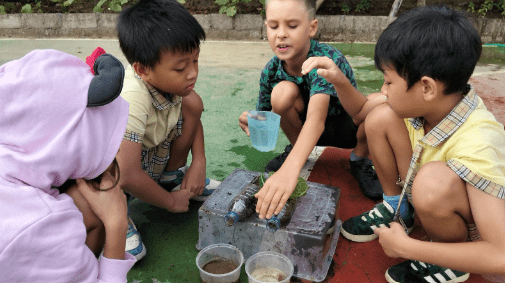
Here the students compare the effects of water erosion on a cleared land (with just soil) in comparison to land protected by plants. The difference in the amount of water and the water quality were both clear.
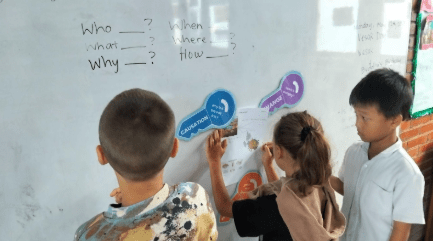
Cause and Effect” charts
Our inquiry naturally expanded to personal responsibility. Students explored sustainable alternatives to everyday products- testing out soap nuts, examining naturally-grown loofahs, and even creating their own biodegradable plastic. This activity sparked cross-disciplinary connections, especially in math, as students measured, doubled recipes, and developed confidence with units of measurement.
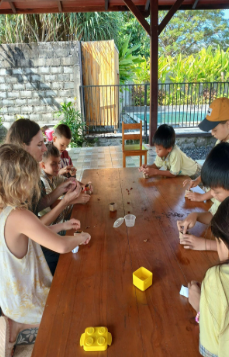
Doing an experiment is a guaranteed way to get students engaged. Here they are creating their own biodegradable plastic and seeing how a simple alternative can be readily available.
Exploration table where students matched the type of beach with the bird and the function.
Creating and hiding some of their camouflaged butterflies.
Creating and hiding some of their camouflaged butterflies.
These experiences have not only fostered scientific thinking but have also encouraged empathy and a growing sense of responsibility toward living things. We continue to cover each piece of the unit including getting more familiar with the key concepts, reflecting on the learner profile attributes, and moving to a global discussion by introducing the United Nations Sustainable Development Goals.
Looking ahead, students are also beginning to take action based on their learning. As part of our upcoming Entrepreneur Market, they will be brainstorming ways to contribute proceeds to causes that support their interests. This initiative empowers learners to become changemakers- connecting their passions, their learning, and their growing understanding of how they can make a difference. Our inquiry is ongoing, and our classroom is alive with questions and ideas. It’s a great reminder that even our youngest learners are capable of thoughtful reflection and meaningful impact when given support and ownership in their learning journey.
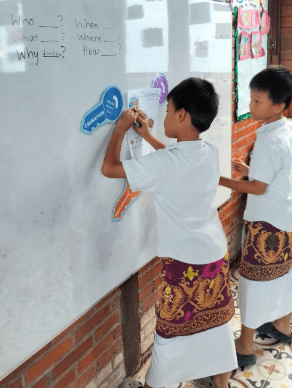
Students continue to explore the key concepts, sharing their previous knowledge, what they wonder about and what they have learned so far.